Calendar

2011年11月9日星期三

11/9's Summary


Dear Reading Club Friends
Today we had an article from The Economist (Oct 01, 2011), “Asia’s new model company”, which is about Samsung’s extraordinary success and whether its strategy will be suitable for Chinese companies. The discussion progressed by an overview of the passage along with in-depth analysis of each paragraph, which embedded essential reading skills and mindsets.

To begin with, we tried working out the flow of thinking of the author. Posts on The Economists are often regarded to be hard to read and understand. But such conventional belief is not necessarily the truth. It has nothing to do with where the author wants to go, but how YOU feel. Try not labelling reading materials as “abstract” or “obscure” at first glance. If you were cowed by the bluster, you would fail carrying on reading. And, in fact, the context of today’s reading turned out to be quite interesting considering the transitions and humour in the essay.
 
It also helps when you have the big picture before reading, for example, related cognition in history, economics, or politics. With a context in mind, it is easier to read critically and think independently, stimulating the desire and interest for reading those seemingly hard work.
 
Afterwards we analysed the first two paragraphs in detail due to a limitation of time. The first paragraph mainly describes the success of Samsung as well as other ambitious chaebols (財閥) in South Korea. And then it gives a list of characteristics of the new Asian model of capitalism, which ignores the Western conventional wisdom. The rest of the passage will be discussed next Wednesday. This is today’s summary. Good night.
 
To read the article, click the link: http://www.economist.com/node/21530984
Book mentioned: 《醜陋的韓國人》金文學
large.jpg
 

-- 
Reading Club
Student Development Services, CityU

2011年11月3日星期四

11/2's Summary

Dear Reading Club Friends,


During the Wednesday session, we first reviewed some breaking news recently and then had a nice discussion on “happiness”.
First news is about German experiments on board of Chinese Shenzhou-8 capsule, which is the first step that China opens its manned space program to international participation. The next one is a follow-up of Greece debt crisis that surprised the whole EU: Greek is going to push ahead with a referendum on a European Union debt bailout deal in order to fight off a barrage of criticism. Last one is that the British government planned to recapitalize its banks by separating routine banking from investment banking, as well as increasing the minimum level of reserve. Since Britain is the leader in market economics, its decisions and set of regulations can be perceived as a reference for other countries suffering the crisis at the time. The TV series "The Rising of Great Powers (大國崛起)" is recommended for your further study.
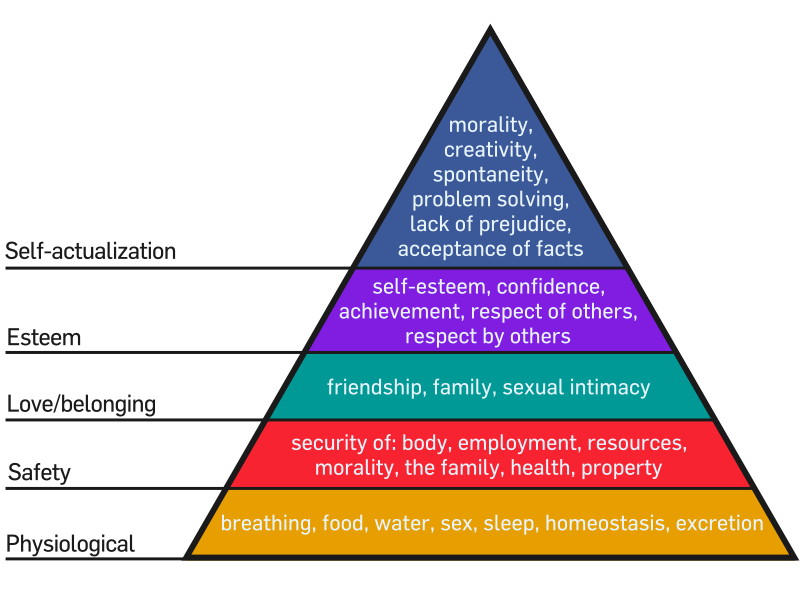
Then we turned to the point “happiness”. The discussion was led by a series of questions. Firstly, what makes you happy? The responses vary from completing a task to uniting with family, which includes the following aspects: actions (hand/physical/身), cognition (head/psychological/意), emotion (heart/心), and spirit (靈). The second question is that what is happiness and that what its characteristics are. Happiness is subjective, personal, and changing from time to time. It is kind of feeling that lead to the flow of mental status. Mr. Joseph mentioned a philosophic book called “Flow: The Psychology of Optimal Experience”, by Mihaly Csikszentmihalyi. There are great translations like 《神馳》(臺譯), 《快活不知時日過》or 《過癮》(港譯). An old Chinese saying goes like that, “山中方七日,世上已千年”(虞喜,345-356,志林). And Albert Einstein called it relativity, putting it humorously (當你追求一個漂亮的女孩時,一小時仿如一秒;當你坐在熱的煤渣上時,一秒仿如一小時). Then comes to the question that is happiness kind of satisfaction or existence? On “existence”, there is a philosophical Latin statement proposed by René Descartes, saying Cogito ergo sum (English: "I think, therefore I am"; 我思故我在). We can change the word “think” to “feel/act/etc.” to illustrate one’s own existence. On “satisfaction”, happiness means an abundant life, or say, self-realization/self-actualization/自我實現(Abraham Maslow, “Hierarchy of Needs”). Different people have different perspectives towards their self-realization. In traditional Chinese philosophy, it means achieve the state of “仁” or “道”. 孔子:“朝聞道,夕死可矣。” “有朋自遠方來,不亦樂乎?”;老子:“道可道,非常道。”“一曰慈,二曰儉,三不為天下先。” When it comes to religions, Karen Armstrong, a British nun, wrote a book called “compassion”.
We are going to have a few discussions on religions next Wednesday. See you then.
“山中方七日,世上已千年”(虞喜,345-356,志林)
信安山有石室,王質入其室,見二童子對弈,看之。局未終,視其所執伐薪柯已爛朽,遂歸,鄉里已非矣。
Flow, The Psychology of Optimal Experience

1.jpg2.JPG
Maslow's hierarchy of needs
800px-Maslow%27s_Hierarchy_of_Needs.svg.png
Compassion by Karen Armstrong
3.JPG

2011年10月27日星期四

10/27's Summary

Dear Reading Club Friends,

First of all,please read the reading reflection of  《論語》,written by Dr.Cheung: http://readingclubcityu.blogspot.com/

Today we started our meeting by discussing the issue of “大陆狗”, and then we talked about the freedom of speech.Please also see a example given by Marcia W Baron,a moral philosopher at the University of Illinois in the US:
"A speaker had been invited to campus. The point of his lecture would be to oppose free speech. Some of the faculty objected streuously to having him to campus and favoured 'uninviting' him. Free speech is a great value, and they did not want to see it underminded by this or any other speaker. Others defended the plan to bring him to campus-- and they did so in the name of free speech".
But, our friends, how could both parties appeal to free speech in defence of their respective views in this dispute?
Have you ever though abou questions like this? We all said it's an offence to say the word "大陆狗", but why can the public and media name Mr.Stephen Lam Sui-lung by using the word "林公公"? Moreover, isn't it an offence for Sir Donald Tsang Yam-kuen to called Hon. Wong Yuk Man Raymond as a "叉仔" or "黑社会"?
We do not have a standard answer for these kinds of ethical problems, but we do have a not bad solution for it: The Golden Rule (One should treat others as one would like others to treat oneself). It seems that there are no best anser for the fundamental ethical problems and we have to be patient enough to search a better one,isn't it?

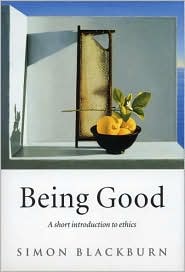
Books we shared today:

--

Reading Club
Student Development Services, CityU
Our Facebook:http://www.facebook.com/#!/group.php?gid=72484354159
Our Blog: http://readingclubcityu.blogspot.com/

2011年10月26日星期三

推介《論語》,張博士

《論語》是我讀過的中文著作當中,令我感到最為奮進的一部書。近期我因為要撰寫一篇論文,比較英國20世紀哲學家奧克肖特(Michael Oakeshott) 和孔子的教育思想,因此又細讀了《論語》一遍。
在這篇簡短的推介中,我想談談三點感想。
首先,《論語》中記載了不少孔子和他的學生趣味盎然的學習經驗。《論語》開宗名義便說:「學而時習之,不亦說乎?有朋自遠方來,不亦樂乎?」
對孔子來說,學習是充滿趣味的,因為通過學習,我們從無知變成知,開始懂得欣賞世界是如斯的多樣化,以及人類心靈建立出來的真善美。能夠和朋友師生一起學習交流更是賞心樂事,通過彼此的學問切磋,往往能舉一反三,温故知新,讓我們體會到箇中的其樂無窮。孔子和學生子貢以下在《論語》中的一番對話,便是其中一個生動的例證:
            子貢曰:「貧而無諂,富而無驕,何如?」
            子曰:「可也。未若貧而樂,富而好禮者也。」
            子貢曰:「《詩》云:『如切如磋,如琢如磨』,其斯之謂與?」
            子曰:「賜也!始可與言《詩》已矣。告諸往而知來者。」
通過交流學習促成彼此在學問上的進步,除了是很快樂的一回事,也是學習的目的。用現在的話來說,求學不是求分數,而是通過學習了解自己,了解世界,了解人與人、人與世界、以及外在世界各事物之間的關係。真正做學問的人是求知識、求自知,所以《論語》說「古之學者為己」,做學問不是求名求利求人知。故此,「人不知而不慍,不亦君子乎?」
通過這樣的理解去看學問的追尋,便明白到孔子最好學的弟子顏回為甚麼在「一簞食,一瓢飲,在陋巷」也不改其樂。孔子自己也說,他自己「發憤忘食,樂以忘憂,不知老之將至云爾。」因此,我讀《論語》的第二點體會是:學習是有其內在價值的,這價值超越了現實的考量、憂慮、甚至生命的限制,孔子和他那批好學的門徒,直是這方面的範例。
至於我讀《論語》的第三點體會,就是發現孔子和他不少門生都是很生動而有性格的人。其中孔子更是頗有幽默感和會說笑的一位老師,有時甚至會以「殺鷄焉用牛刀」這些話來開學生的玩笑。在這簡短的推介中,恕我不直接引述《論語》中有關的章節,讓我另推介林語堂先生的〈孔子的幽默〉和西方學人Christoph Harbsmeier”Humor in The Analects 這兩篇文章,保證大家讀後會會心而笑。
張楚勇
輔導長
20111024

10/26's Summary

Dear Reading Club friends,

Today we watched the documentary film "Inside Job" for about 40 minutes.
The film is great, especially in its narrating and interpreting abilities to get down to the basics.The documentary consists of a number of interdependent individual interviews, which always lead to amazing inside stories in the financial industry. Although perceived as kind of economic illustration, the documentary itself is lively, or say, humorous in word choices at certain points: it makes you smile despite the feeling of absurdity for those GIANT decisional pitfalls. Strongly recommend it, even from my own point of view.
Afterwards, we had a few words on the documentary about how the financial crisis is turning from lacking liquidity in 2008 towards no willingness to investment in 2011.
Finally we moved on to continue the topic last week about big concerns in Asia.They are:
the rising nations including China, India, and Indonesia;
the absence of union in terms of politics and economics;
the challenge facing transformation of value chain (from the primary and secondary industry to the tertiary industry). A Singaporean called Kishore Mahbubani wrote a book "Can Asians think?", which discusses the third point.
Next week we are supposed to talk about the topic "happiness". Have a good time and see you all then!
--

Reading Club
Student Development Services, CityU
Our Facebook:http://www.facebook.com/#!/group.php?gid=72484354159
Our Blog: http://readingclubcityu.blogspot.com/

2011年10月20日星期四

10/20's Summary

Dear Reading Club Friends,

Yesterday we had a heated discussion led by Mr.Joseph on  the big challenges in the five aspects of Modern China,they are:
Society: The lost of human nature
Politics: The review or even re-construct of value system
Economics: How to move up the value chain
Culture: The lack of belief or the deficiency of religion
Environment: How to build a clear and save Environment for human living
However, these challenges listed above are not the only answer,everyone may have his own opinion.What's important is to find China's position in the world and then you can plan your future well.It's also important that once you had found the position of China and of yourself,you can represent the country when you show up on the international stage.
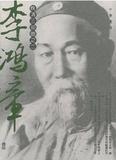
Finally,we share three books about the three great men in the late Qing dynasty:《晚清三部曲之李鸿章、曾国藩、袁世凯》.
T1ko9gXlhxXXXrLa7._081335.jpg_160x160.jpg    T1K0ahXgheXXbIUm7__080531.jpg_160x160.jpg    T1OF5hXcJvXXbR0Go._080945.jpg_160x160.jpg

-- 
Reading Club
Student Development Services, CityU