Calendar

2011年11月9日星期三

11/9's Summary


Dear Reading Club Friends
Today we had an article from The Economist (Oct 01, 2011), “Asia’s new model company”, which is about Samsung’s extraordinary success and whether its strategy will be suitable for Chinese companies. The discussion progressed by an overview of the passage along with in-depth analysis of each paragraph, which embedded essential reading skills and mindsets.

To begin with, we tried working out the flow of thinking of the author. Posts on The Economists are often regarded to be hard to read and understand. But such conventional belief is not necessarily the truth. It has nothing to do with where the author wants to go, but how YOU feel. Try not labelling reading materials as “abstract” or “obscure” at first glance. If you were cowed by the bluster, you would fail carrying on reading. And, in fact, the context of today’s reading turned out to be quite interesting considering the transitions and humour in the essay.
 
It also helps when you have the big picture before reading, for example, related cognition in history, economics, or politics. With a context in mind, it is easier to read critically and think independently, stimulating the desire and interest for reading those seemingly hard work.
 
Afterwards we analysed the first two paragraphs in detail due to a limitation of time. The first paragraph mainly describes the success of Samsung as well as other ambitious chaebols (財閥) in South Korea. And then it gives a list of characteristics of the new Asian model of capitalism, which ignores the Western conventional wisdom. The rest of the passage will be discussed next Wednesday. This is today’s summary. Good night.
 
To read the article, click the link: http://www.economist.com/node/21530984
Book mentioned: 《醜陋的韓國人》金文學
large.jpg
 

-- 
Reading Club
Student Development Services, CityU

2011年11月3日星期四

11/2's Summary

Dear Reading Club Friends,


During the Wednesday session, we first reviewed some breaking news recently and then had a nice discussion on “happiness”.
First news is about German experiments on board of Chinese Shenzhou-8 capsule, which is the first step that China opens its manned space program to international participation. The next one is a follow-up of Greece debt crisis that surprised the whole EU: Greek is going to push ahead with a referendum on a European Union debt bailout deal in order to fight off a barrage of criticism. Last one is that the British government planned to recapitalize its banks by separating routine banking from investment banking, as well as increasing the minimum level of reserve. Since Britain is the leader in market economics, its decisions and set of regulations can be perceived as a reference for other countries suffering the crisis at the time. The TV series "The Rising of Great Powers (大國崛起)" is recommended for your further study.
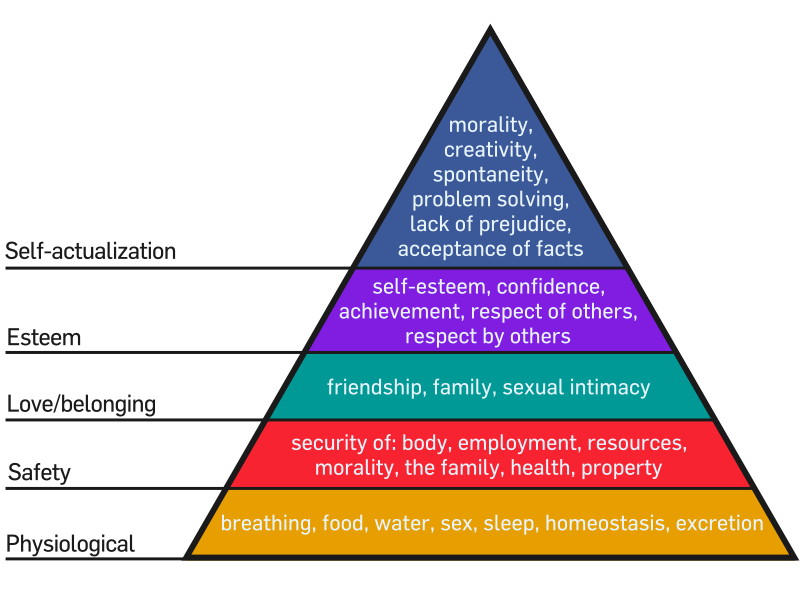
Then we turned to the point “happiness”. The discussion was led by a series of questions. Firstly, what makes you happy? The responses vary from completing a task to uniting with family, which includes the following aspects: actions (hand/physical/身), cognition (head/psychological/意), emotion (heart/心), and spirit (靈). The second question is that what is happiness and that what its characteristics are. Happiness is subjective, personal, and changing from time to time. It is kind of feeling that lead to the flow of mental status. Mr. Joseph mentioned a philosophic book called “Flow: The Psychology of Optimal Experience”, by Mihaly Csikszentmihalyi. There are great translations like 《神馳》(臺譯), 《快活不知時日過》or 《過癮》(港譯). An old Chinese saying goes like that, “山中方七日,世上已千年”(虞喜,345-356,志林). And Albert Einstein called it relativity, putting it humorously (當你追求一個漂亮的女孩時,一小時仿如一秒;當你坐在熱的煤渣上時,一秒仿如一小時). Then comes to the question that is happiness kind of satisfaction or existence? On “existence”, there is a philosophical Latin statement proposed by René Descartes, saying Cogito ergo sum (English: "I think, therefore I am"; 我思故我在). We can change the word “think” to “feel/act/etc.” to illustrate one’s own existence. On “satisfaction”, happiness means an abundant life, or say, self-realization/self-actualization/自我實現(Abraham Maslow, “Hierarchy of Needs”). Different people have different perspectives towards their self-realization. In traditional Chinese philosophy, it means achieve the state of “仁” or “道”. 孔子:“朝聞道,夕死可矣。” “有朋自遠方來,不亦樂乎?”;老子:“道可道,非常道。”“一曰慈,二曰儉,三不為天下先。” When it comes to religions, Karen Armstrong, a British nun, wrote a book called “compassion”.
We are going to have a few discussions on religions next Wednesday. See you then.
“山中方七日,世上已千年”(虞喜,345-356,志林)
信安山有石室,王質入其室,見二童子對弈,看之。局未終,視其所執伐薪柯已爛朽,遂歸,鄉里已非矣。
Flow, The Psychology of Optimal Experience

1.jpg2.JPG
Maslow's hierarchy of needs
800px-Maslow%27s_Hierarchy_of_Needs.svg.png
Compassion by Karen Armstrong
3.JPG